

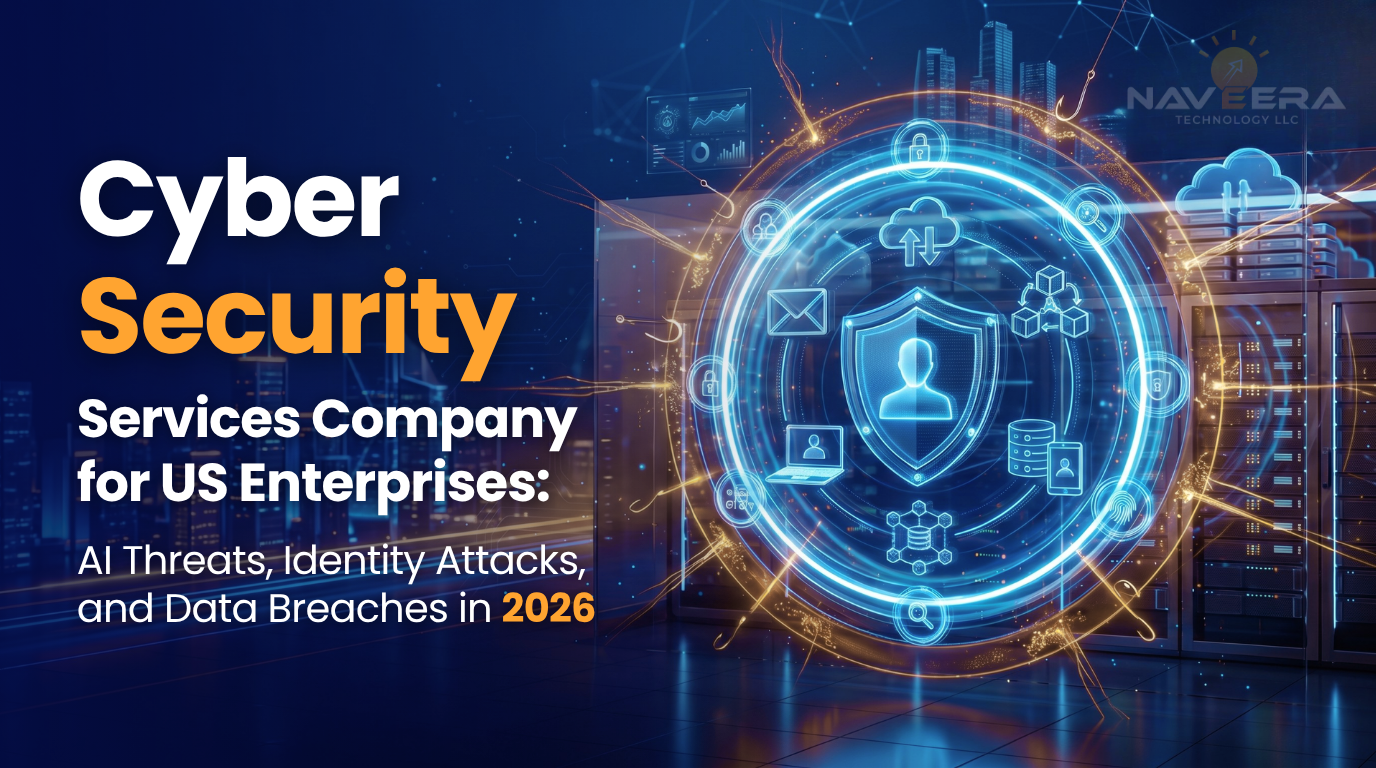
One compromised identity can give an attacker access to email, cloud applications, sensitive data, and critical business systems—often before the security team recognizes what has happened. That is why choosing a Cyber security Services Company is no longer simply about deploying more security tools. It is about building the visibility, controls, and response capabilities required to contain threats before a single intrusion becomes an enterprise-wide crisis.
The problem is not having the right tools. Most companies already have firewalls, endpoint systems, cloud protections, identity setups and monitoring services. The bigger issue is getting all those investments to work as one. The business needs to spot dangers, stop problems fast and get back to normal without any big issues.
Why Enterprise Cybersecurity Must Change in 2026
Today, businesses are really connected. People who work for companies, customers, people they do business with, computer programs and artificial intelligence systems all talk to each other. They do this on the internet, special software, phones and computers at the office. This helps companies get bigger. It also means bad people have more chances to find holes in the system.
Cybercriminals target exposed systems, stolen credentials, excessive permissions, vulnerable applications, cloud misconfigurations, and poorly managed third-party access. Generative AI adds speed and scale by helping attackers create convincing phishing messages, imitate executives, automate reconnaissance, and adapt campaigns quickly.
Cybersecurity is not about stopping every attack. It is about making the business harder to breach, quicker to respond, and ready to recover when an incident occurs.
| Enterprise risk | Potential business impact | Security priority |
| Stolen credentials | Account takeover and unauthorized access | Phishing-resistant MFA and identity monitoring |
| Ransomware | Downtime, lost revenue, and recovery costs | Segmentation, tested response, and protected backups |
| Cloud misconfiguration | Data exposure and service disruption | Continuous posture management and access control |
| AI-agent misuse | Unauthorized actions at machine speed | Scoped identities, approval gates, and audit logs |
| Third-party compromise | Supply-chain exposure | Vendor controls and restricted integrations |
Identity and AI Are Reshaping the Attack Surface
The enterprise perimeter is now identity. Employees, contractors, service accounts, workloads, applications and AI agents all need access.. This access must have a clear reason, a responsible person and a specific end date. Unused accounts, on administrator rights, repeated passwords and badly managed machine identities create chances for attackers to take advantage without even needing to break into a normal network.
A modern identity program should include:
- Phishing-resistant multifactor authentication
- Least-privilege and time-limited access
- Privileged access management
- Fast onboarding, role-change, and offboarding controls
- Behavioral detection for unusual access or data movement
- Regular reviews of human and nonhuman permissions
AI systems introduce additional risk. Models may process confidential data, retrieval systems may connect to sensitive knowledge bases, and agents may call APIs or initiate business workflows. Security teams must define what each AI system can access, which actions require human approval, what information may be retained, and how activity will be logged and reviewed.
Naveera’s Artificial Intelligence Services help enterprises connect AI engineering with governed data access, secure production architecture, observability, and responsible automation.
What Managed Security Should Deliver
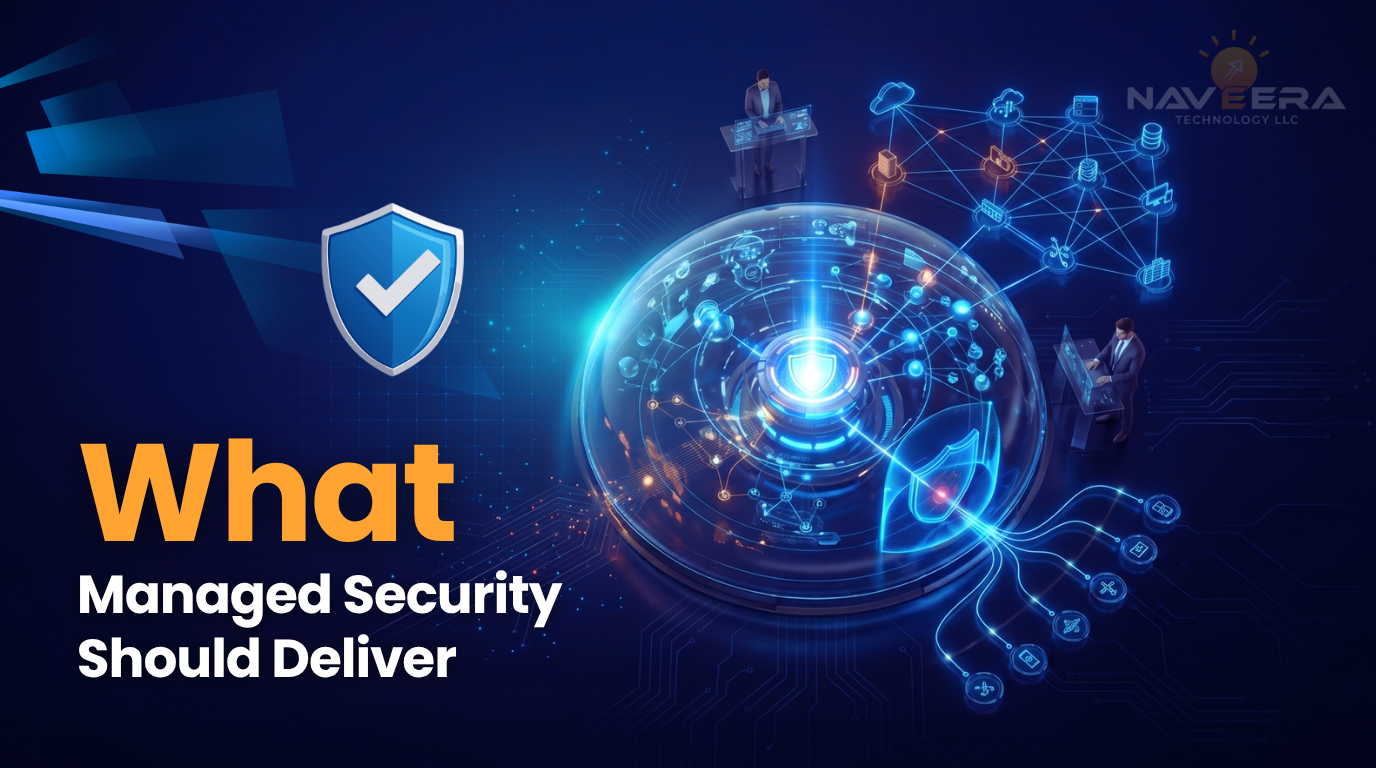
Effective Managed cyber security services should offer more than automated alerts. Companies need analysts who can look into activity, figure out which parts of their systems are involved explain the risks to their business and help stop any damage. A strong service usually has 24/7 monitoring, managed detection and response SIEM operations, threat hunting, vulnerability management help during incidents and reports, for executives.
The distinction between notification and investigation matters. An alert says something happened. An investigation explains what happened, why it matters, and what should happen next. Response authority must be agreed upon before an incident so there is no confusion about who can isolate a device, disable an account, block traffic, or involve legal and recovery teams.
Vulnerability management should also be risk-based. A long list of findings does not tell leaders what to fix first. A capable Cyber security Services Company considers exploitability, internet exposure, asset criticality, available controls, and potential operational impact before recommending remediation.
Naveera’s IT Infrastructure Services connect secure cloud and hybrid architecture with monitoring, resilience, and operational governance. Security should also begin during software design; Naveera’s Application Development Services help address application and API risk throughout the product lifecycle.
Managed Security vs. an In-House Team
Internal teams bring business context and direct ownership. Hiring specialists in cloud security, identity and threat detection can be expensive. Hiring people for incident response, application security and compliance also costs a lot. Keeping people available all day and all night is another challenge.
Managed cyber security services can help a company by adding skills, proven ways of working, ongoing checking and extra help when there is a big problem. For companies a co-managed way is the best choice. The people who run the company still make the choices, about risk and business while the service provider gives more support and more help when needed.
A good cyber security services company should act like part of the company, not someone sending alerts from far away. The jobs, how problems are handled, how fast things are fixed, how data is. Who can make decisions should all be written down and checked regularly.
How to Select the Right Provider
Before signing an agreement for Managed cyber security services, ask:
- Which assets, identities, cloud platforms, applications, and data sources will be monitored?
- How quickly will high-severity activity be investigated and escalated?
- Who can authorize containment during nights, weekends, or holidays?
- Can the team investigate threats involving enterprise AI and machine identities?
- How will detection rules and response playbooks be customized?
- What support is available during ransomware, data theft, or recovery?
- Which reports will demonstrate improvement to executives, auditors, and insurers?
Avoid providers that promise “complete protection.” No responsible Cyber security Services Company can eliminate cyber risk. The better question is whether the provider can measurably reduce exposure, shorten response times, and help the organization continue operating when prevention fails.
Measuring Cybersecurity as a Business Outcome
Security reporting should support decisions rather than fill dashboards. Useful measures include:
- Time to acknowledge, investigate, contain, and recover
- Percentage of critical assets covered by monitoring
- Closure time for exploitable vulnerabilities
- Adoption of phishing-resistant MFA
- Reduction in standing privileged access
- Results from incident-response and recovery exercises
- Readiness for audits, cyber insurance, and customer reviews
An experienced Cyber security Services Company connects these indicators to revenue, operations, trust, and compliance. Faster containment around a payment platform matters because it protects transactions and customers—not simply because it improves a security score.
Strengthen Cyber Resilience with Naveera Technology
Naveera Technology combines cloud, infrastructure, application, data and AI engineering views to help US companies protect the systems that keep their business running. Naveera can look at risks, create a plan based on those risks, make identity and cloud controls stronger, make monitoring better and get teams ready to deal with issues and recover from them.
For companies that want to support a managed security partnership can help increase what their own team can do while making sure they still have control. As technology changes as threats change and as business goals change the security plan needs to change.
The right Cyber security Services Company helps leadership move from reactive defense to repeatable resilience: understand the risk, detect credible threats, contain damage, and restore essential services with confidence.
FAQ
What are cyber security services?
Cyber security services help organizations assess risk, protect identities and systems, monitor threats, respond to incidents, and improve recovery. They may cover cloud, endpoints, applications, data, compliance, vulnerability management, and incident response.
What does a managed cybersecurity service include?
Managed cyber security services typically include 24/7 monitoring, alert investigation, managed detection and response, SIEM operations, threat hunting, vulnerability management, incident support, and executive reporting. Exact coverage and response authority should be stated in the agreement.
How does a cyber security services company protect an enterprise?
A Cyber security Services Company identifies critical assets, attack paths, vulnerable identities, and control gaps. It then helps strengthen defenses, monitors suspicious behavior, supports containment, and measures whether business risk is declining.
Can managed security prevent every data breach?
No provider can guarantee prevention. Managed cyber security services can reduce the likelihood and impact of a breach through stronger controls, continuous visibility, faster investigation, and coordinated response.
How should an enterprise choose a provider?
Evaluate relevant industry experience, cloud and identity expertise, monitoring coverage, service levels, escalation procedures, reporting quality, data handling, and support during real incidents. The provider should explain its operating model and expected outcomes clearly.
How do managed providers address AI-powered threats?
Managed cyber security services can combine behavioral analytics, identity protection, phishing-resistant controls, application testing, data security, and threat intelligence. They should also assess AI-agent identities, API access, knowledge sources, approval rules, and runtime activity.