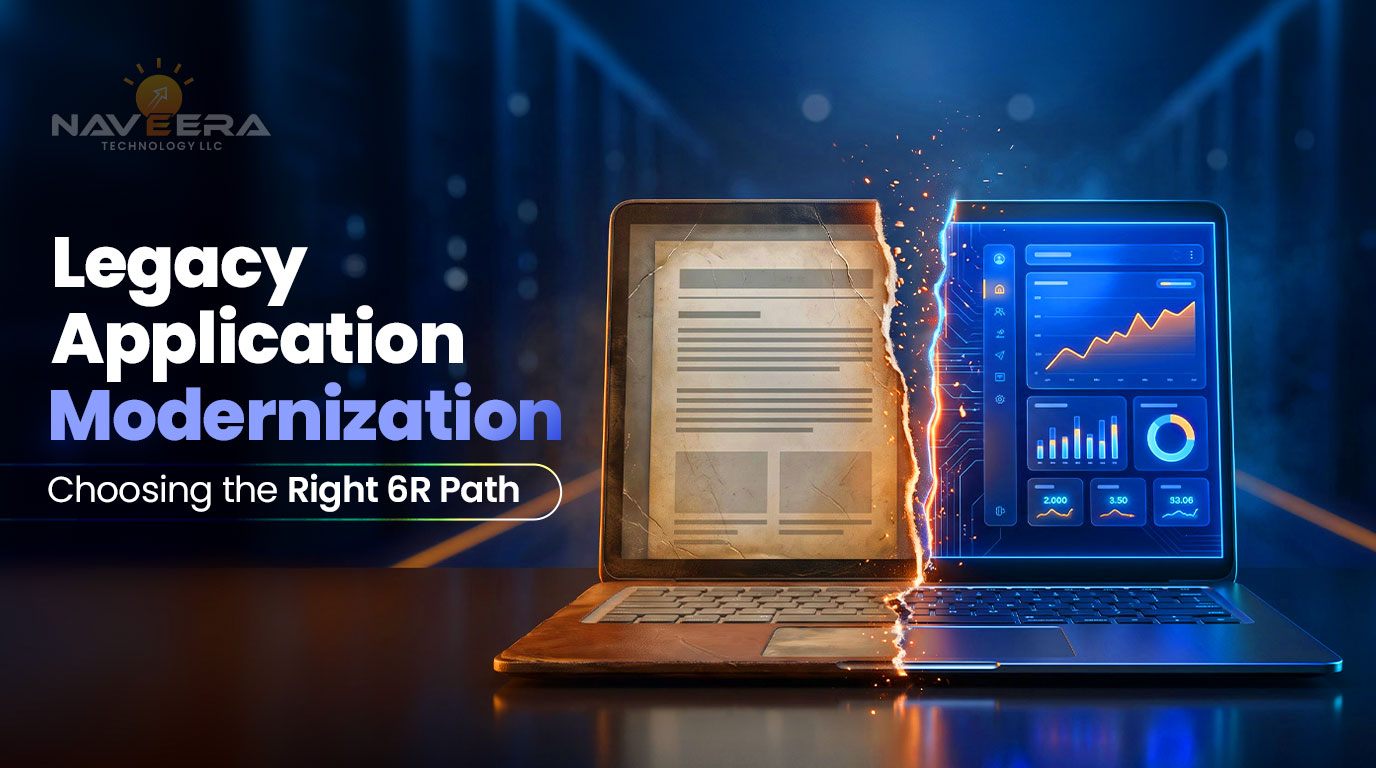
A regional distributor had relied on the same order-management application for nearly 15 years. The system still processed orders, but every business change required another workaround. Releases took weeks, integrations failed without warning and only two developers fully understood the code. Legacy application modernization had become necessary—but choosing the wrong approach could disrupt the operations the company was trying to improve.
This is a common challenge for technology leaders. They know an application must change, but they may not know whether to move it, optimize it, rebuild it, replace it or leave it alone. A poor decision can transfer technical debt to a more expensive environment without improving security, scalability or delivery speed.
The 6R model gives enterprises a structured way to evaluate these choices according to business value, technical condition, risk and cost. It should support a decision—not become a mandate to move every application to the cloud.
What Is Legacy Application Modernization?
Modernization improves an existing application so it can support current business, security, integration and operational requirements. Depending on the application, the work may change its infrastructure, platform, architecture, code or business capability.
Effective legacy system modernization begins with the problem the organization needs to solve. An aging system may be expensive to maintain, difficult to integrate, dependent on unsupported technology or unable to scale. In other cases, an older application may remain stable and valuable, making limited intervention more appropriate than a complete rebuild.
Modernization vs. Migration
Migration moves an application, workload or dataset from one environment to another. Modernization changes how the application is built, operated or used.
Moving a virtual machine from an on-premises data center to AWS, Microsoft Azure or Google Cloud is migration. Modernizing APIs, automating deployments or redesigning a monolith into modular services represents modernization.
A cloud destination does not automatically remove outdated code, fragile dependencies or inefficient data structures. Without the right plan, an organization may simply relocate its existing problems.
When Does an Application Need Modernization?
Common warning signs include:
- Releases are slow, risky or highly manual.
- Unsupported frameworks create security exposure.
- Maintenance consumes funding intended for innovation.
- Integrations break whenever another system changes.
- Performance cannot scale with transaction growth.
- Critical knowledge belongs to only a few employees.
- Customers experience slow or inconsistent workflows.
Age alone should not determine the decision. A mature application that performs reliably may be retained. A newer system with poor architecture and escalating costs may require attention sooner.
What Are the Six Modernization Paths?
The commonly used six paths are rehost, replatform, refactor, repurchase, retire and retain. Current AWS Prescriptive Guidance uses seven paths by adding Relocate, which moves workloads between compatible environments with limited architectural change.
The practical value of the 6 Rs of application modernization is not the terminology. It is the discipline of selecting an appropriate treatment for each application.
Rehost: Move With Minimal Change
Rehosting moves an application to new infrastructure without substantially changing its code or architecture. Often called “lift and shift,” it can support a rapid data-center exit and reduce dependence on aging hardware.
This path works when speed matters and the application is stable enough to move. However, it does not eliminate technical debt or architectural limitations.
Replatform: Improve Without Rebuilding
Replatforming introduces targeted improvements without redesigning the complete application. A business might move a database to a managed service, containerize an application or replace manual deployment with an automated pipeline.
This approach can reduce operational effort while limiting code changes. Microsoft’s Cloud Adoption Framework advises organizations to avoid over-modernizing and connect each decision to business value.
Refactor: Redesign for Future Requirements
Refactoring changes code or architecture to improve maintainability, scalability and cloud suitability. It may involve modularizing a monolith, modernizing APIs or adopting event-driven services.
Refactoring offers greater flexibility but requires more engineering, testing and organizational readiness. It is usually appropriate for strategically important applications whose architecture restricts growth.
Repurchase: Replace With a Commercial Platform
Repurchasing replaces custom software with a product, often a software‑as‑a‑service platform. Repurchasing can reduce maintenance but introduces licensing, configuration, data‑migration and user‑adoption requirements.
The organization must also consider vendor dependency, customization limits and long-term ownership costs.
Retire: Remove What No Longer Creates Value
Some portfolios have duplicate outdated applications. Getting rid of them can cut down on licensing fees, infrastructure needs, support work and security risks—without requiring a migration.
Before taking any system offline teams need to make sure they understand how it is being used and what data retention rules. Whether other systems depend on it.
Retain: Keep the Application for Now
Retention is a deliberate decision to leave an application in its current environment. It may be suitable when the system remains stable, has limited change requirements or is scheduled for later retirement.
Every retained application should have an owner, risk plan and review date. Otherwise, “retain” can become permanent avoidance.
How Do You Choose the Right 6R Path?
Strong application modernization strategies evaluate applications individually instead of applying one decision across the portfolio.
Technology and business leaders should ask:
- How important is the application to revenue, customers or operations?
- What technical, security and continuity risks does it create?
- Which systems, databases and processes depend on it?
- What measurable outcome would justify changing it?
- Does the organization have the skills to operate the target state?
An application that has a lot of business value and also has a lot of risk might be worth refactoring. An application that doesn’t have value and has the same level of risk might be retired. A system that is stable and doesn’t need many changes might be kept. An application that is affected by a data-center deadline might first be moved to a location.
Security should influence the decision. IBM’s 2025 Cost of a Data Breach Report found that the average U.S. breach cost reached a record $10.22 million. This does not mean every legacy application will cause a breach, but it demonstrates why unsupported technology and weak access controls cannot be treated as secondary concerns. Source: IBM, 2025
Use a 6R Modernization Decision Matrix
A decision matrix makes the evaluation more transparent.
| Application condition | Likely path | Business rationale |
| Stable workload; rapid infrastructure exit required | Rehost | Moves quickly with limited change |
| Sound application; high operational burden | Replatform | Improves operations without rebuilding |
| Strategic system; architecture limits growth | Refactor | Addresses technical debt and flexibility |
| Commodity capability; suitable product exists | Repurchase | Reduces custom maintenance |
| Low usage; duplicate capability | Retire | Removes unnecessary cost and risk |
| Stable system; weak case for change | Retain | Avoids investment without clear value |
The matrix should guide discussion rather than make the final decision automatically. Data sensitivity, acceptable downtime, application dependencies and available skills may change the recommendation.
Modernization paths can also be combined. An application can be moved to a server to meet a deadline. Later the application can be moved onto managed services. After that the application can be changed piece by piece. Good application modernization strategies let the application improve in steps.
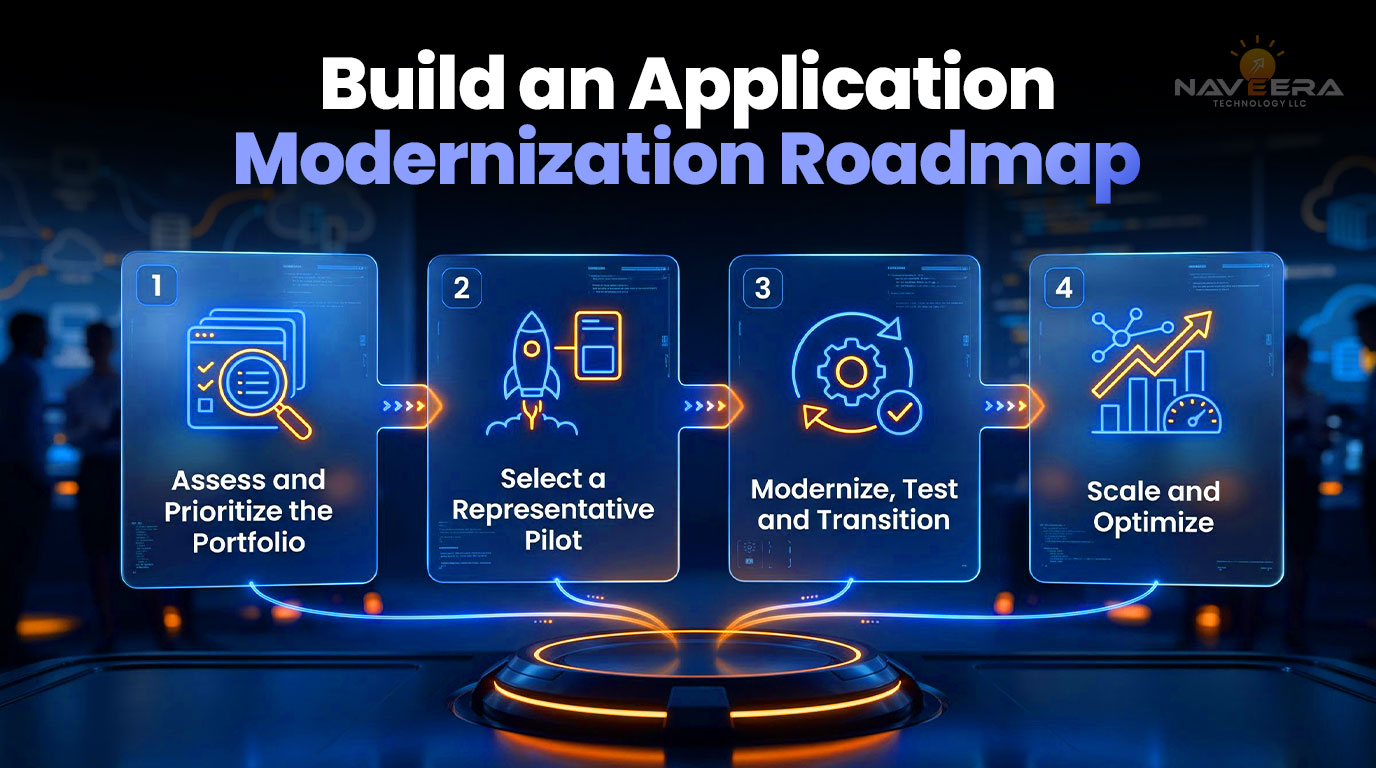
Build an Application Modernization Roadmap
A practical roadmap connects portfolio decisions to delivery waves, funding, ownership and measurable outcomes.
Assess and Prioritize the Portfolio
Inventory applications, infrastructure, databases, integrations, owners and support arrangements. Record operating costs, usage, security status, business criticality and recovery requirements.
Dependency discovery is essential. An application that appears independent may exchange files overnight, use a shared database or provide information required for financial reporting.
Select a Representative Pilot
Choose a project meaningful enough to test the approach but contained enough to recover safely. Establish baseline measurements such as deployment time, recovery time, incident volume, performance and maintenance effort.
The easiest application is not always the best pilot. A project that tests none of the organization’s real integration, data or security challenges provides limited evidence for scaling.
Modernize, Test and Transition
Develop outside production and validate functionality, integrations, performance, security and user workflows. Define data-reconciliation rules, cutover responsibilities, monitoring and rollback conditions before deployment.
Business continuity must shape the plan from the beginning rather than being added immediately before launch.
Scale and Optimize
After the pilot, document what worked, what failed and which assumptions changed. Reusable landing zones, API standards, observability, CI/CD controls and security policies can make later delivery waves more predictable.
This is how legacy system modernization becomes a repeatable organizational capability instead of a collection of isolated projects.
Control Modernization Risk
The greatest risks often exist between applications rather than inside the code being changed. Shared databases, batch jobs, identity services and undocumented manual processes can create unexpected failure points.
Before cutover, validate:
- Application and data dependencies
- Encryption and access controls
- Recovery-time and recovery-point objectives
- Data accuracy and reconciliation
- API compatibility
- Performance under realistic load
- Monitoring and incident response
- User training and support readiness
- Rollback triggers and authority
Trying to refactor everything simultaneously can increase risk without increasing value. Phased delivery helps teams isolate failures, learn from production behavior and protect critical workflows.
How Should Modernization Success Be Measured?
Success is not simply moving an application to the cloud. It is improving an outcome the business can observe.
Relevant measures include deployment lead time, change-failure rate, availability, recovery time, infrastructure cost, security findings, maintenance effort, integration speed and user satisfaction.
Total cost of ownership should include engineering, cloud consumption, licenses, data migration, testing, training, vendor management and continuing technical debt. Without a baseline and target, modernization activity cannot demonstrate business improvement.
How Naveera Technology Supports Application Modernization
Naveera Technology helps enterprises assess application portfolios, identify dependencies, choose modernization paths and build phased delivery plans.
Its application development services can support architecture improvement, API modernization, refactoring and platform replacement. Where application changes depend on databases, pipelines or governed information, Naveera’s data engineering services can support integration, migration and data quality.
Engagement should start with evidence. Engagement must show what the application adds, what risk the application creates and which path the application takes leads, to an outcome. This engagement stops legacy application modernization from becoming a technical project without clear business value.
Final Takeaway: Match the Path to the Application
Not every application should be rebuilt, and moving software to the cloud does not automatically make it modern.
Rehost when speed matters. Replatform when targeted operational improvements are sufficient. Refactor when architecture restricts a strategic application. Repurchase commodity capabilities, retire systems that no longer create value and retain applications that still justify their place.
The right path is the one that improves business value while controlling cost, disruption and risk.
FAQ
What is legacy application modernization?
It improves an existing application’s infrastructure, platform, architecture, code or operating model so it can meet current business, security and integration requirements.
What are the 6Rs of application modernization?
The six paths are rehost, replatform, refactor, repurchase, retire and retain. AWS currently adds relocate and describes seven migration strategies.
How do you choose the right application modernization strategy?
Effective application modernization strategies evaluate business value, technical condition, security risk, dependencies, cost, timing and internal skills before selecting a path.
What is the difference between rehosting and replatforming?
Rehosting moves an application with minimal change. Replatforming introduces targeted improvements, such as managed databases or containers, without redesigning the complete application.
When should a legacy application be refactored?
Refactoring is suitable when a strategically important application is limited by technical debt, architecture, scalability or integration constraints.
How long does modernization take?
Timelines depend on scope, dependencies, data volume, compliance requirements and the selected path. Rehosting may take weeks or months, while complex refactoring generally requires phased delivery.
How much does application modernization cost?
Cost depends on discovery, engineering, cloud resources, licensing, data migration, testing, security, training and transition support. A reliable estimate requires an application and dependency assessment.
What should an application modernization assessment include?
It should evaluate business importance, usage, architecture, code, infrastructure, data, integrations, security, operating cost, internal skills and continuity requirements. This evidence determines whether legacy system modernization, replacement, retention or retirement offers the best outcome.