
The End of Promotional AI Marks the Beginning of Smarter Enterprise AI Investments
Enterprise AI is entering a new economic reality, where every model invocation is becoming a strategic investment rather than an unlimited technology expense. Anthropic’s Claude Fable 5 pricing transition after July 7, 2026, is one of the clearest signals that organizations must shift from AI experimentation to disciplined AI governance and value-driven adoption.
Over the past two years, organizations have accelerated investments in generative AI to improve productivity, modernize software development, enhance customer experiences, and unlock value from enterprise data.
As AI adoption has matured, technology providers have also begun refining their commercial models. Promotional access and bundled usage are gradually giving way to consumption-based pricing that more accurately reflects the computational demands of advanced foundation models.
Anthropic’s pricing update for Claude Fable 5, effective after July 7, 2026, represents one of the clearest examples of this transition.
While the announcement introduces changes to how organizations access one of Anthropic’s most capable reasoning models, it also signals a broader shift in enterprise AI strategy. Rather than viewing premium AI models as tools for every workload, businesses are increasingly adopting intelligent model selection, cost governance, and AI portfolio management to maximize return on investment.
For CIOs, CTOs, AI leaders, and enterprise architects, this pricing change presents an opportunity to rethink how advanced AI models are deployed across the organization.
Understanding the Claude Fable 5 Pricing Transition
During the promotional period, eligible Claude subscription customers including Pro, Max, Team, and select Enterprise plans, could access Claude Fable 5 without additional usage charges, subject to specified weekly usage limits. This allowed organizations to explore the model’s advanced reasoning capabilities while evaluating enterprise AI use cases.
Beginning July 8, 2026, this promotional access comes to an end. Organizations that wish to continue using Claude Fable 5 will transition to a consumption-based pricing model, where charges are determined by the number of input and output tokens processed.
Pricing Overview
| Category | Promotional Period (Until July 7, 2026) | After July 7, 2026 |
| Claude Fable 5 Access | Included for eligible Pro, Max, Team, and select Enterprise subscribers within weekly usage limits | Available through usage-based billing |
| Pricing Model | Promotional subscription access | Pay per token consumed |
| Input Tokens | Included within promotional limits | $10 per million input tokens |
| Output Tokens | Included within promotional limits | $50 per million output tokens |
| Best Use Case | Model evaluation, experimentation, and pilot projects | Production-grade enterprise AI, advanced reasoning, coding, and autonomous AI workloads |
While the pricing structure is relatively straightforward, its business implications extend well beyond budgeting. Enterprise AI leaders must now determine where premium reasoning models deliver measurable value and where lower-cost models can achieve similar outcomes more efficiently.
This shift reinforces an important principle in enterprise AI strategy: the objective is not to use the most powerful model for every task, but to deploy the right model for the right workload. Organizations that adopt intelligent model routing, monitor token consumption, and align AI investments with business outcomes will be better positioned to maximize both performance and return on investment.
Why Premium AI Models Cost More
Large reasoning models such as Claude Fable 5 require substantially greater computational resources than standard conversational AI systems.
These models are designed for complex enterprise workloads that demand:
- Advanced logical reasoning
- Multi-step problem solving
- Long-context document analysis
- Software engineering assistance
- Autonomous AI agents
- Strategic planning support
- Scientific and technical research
Running these sophisticated inference processes consumes considerably more GPU resources than simpler AI tasks such as summarizing emails or generating meeting notes.
Consumption-based pricing aligns infrastructure costs with actual enterprise usage while encouraging organizations to deploy advanced models where they create the greatest business impact.
Enterprise AI Is Moving Toward Intelligent Model Routing
One of the most significant trends emerging across enterprise AI is workload-aware model selection.
Rather than relying on a single AI model for every task, organizations are building intelligent AI architectures that route requests based on complexity.
For example:
A customer service chatbot answering frequently asked questions may only require a lightweight language model.
A software engineering assistant generating production-quality code may benefit from Claude Fable 5.
A legal compliance review involving hundreds of policy documents may also justify premium reasoning capabilities.
This approach optimizes both performance and operating costs.
Instead of asking, “Which is the best AI model?”, enterprise leaders are now asking:
“Which model is best suited for this business workload?”
This represents a significant evolution in AI governance.
The Financial Impact for Enterprise Organizations
The introduction of consumption-based pricing encourages organizations to establish stronger financial governance around AI initiatives.
Without visibility into token consumption, AI expenses can increase rapidly as adoption scales across multiple departments.
Forward-looking enterprises are implementing practices such as:
- AI usage monitoring
- Department-level consumption tracking
- Budget forecasting
- Cost allocation by business unit
- Token optimization strategies
- Prompt engineering standards
These governance capabilities help technology leaders understand where AI investments produce measurable business outcomes.
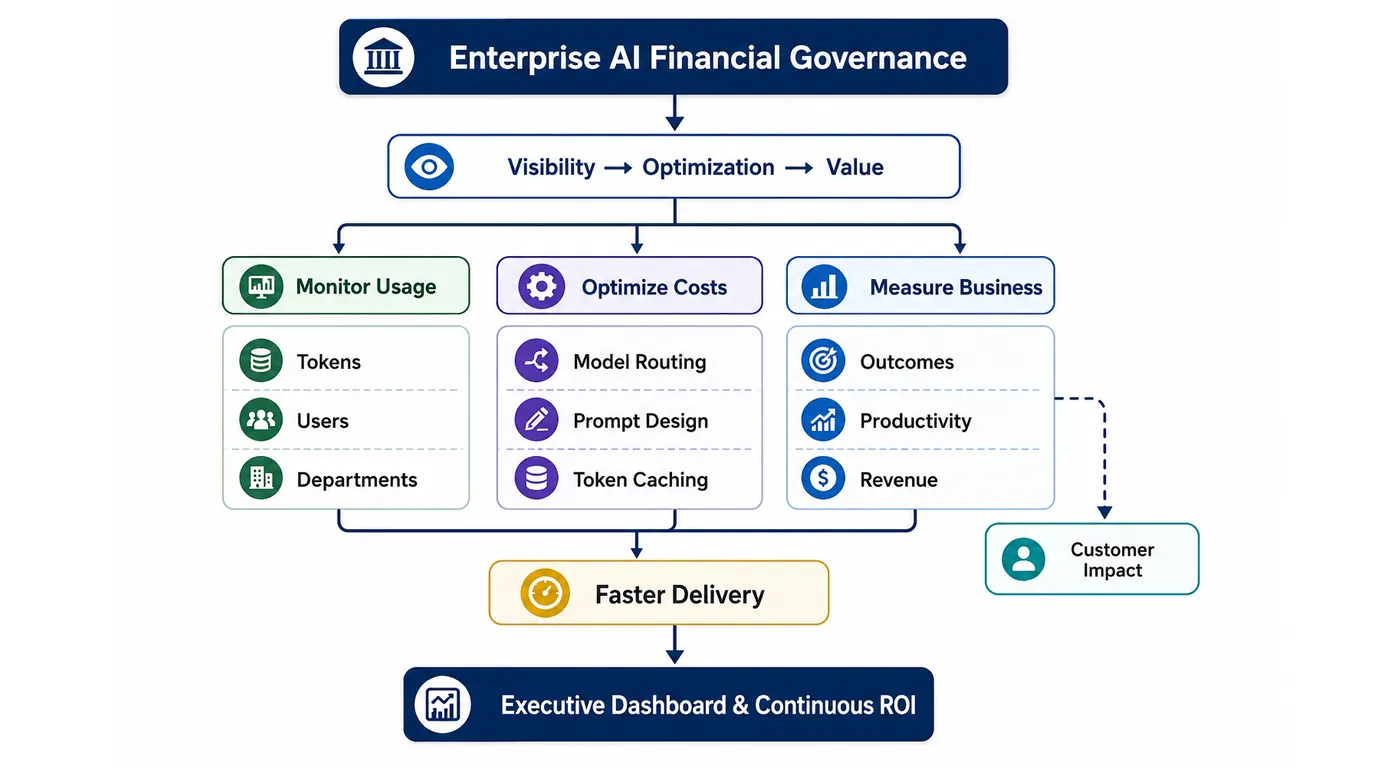
Instead of viewing AI spending as an operational expense alone, organizations increasingly evaluate it alongside productivity gains, software delivery improvements, operational efficiency, and revenue growth.
Selecting the Right Workloads for Claude Fable 5
Premium reasoning models deliver the greatest value when solving high-impact business challenges.
Common enterprise use cases include:
Software Engineering
Development teams use advanced reasoning models for:
- Code generation
- Code review
- Debugging
- Architecture recommendations
- Legacy application modernization
These capabilities reduce development cycles while improving engineering productivity.
Enterprise Knowledge Management
Organizations often struggle with information distributed across multiple repositories.
Claude Fable 5 can analyze large collections of:
- Technical documentation
- Policies
- Research reports
- Contracts
- Knowledge bases
This enables employees to retrieve insights more efficiently.
Strategic Decision Support
Executives increasingly rely on AI to evaluate:
- Business scenarios
- Market trends
- Competitive intelligence
- Investment opportunities
- Risk assessments
Advanced reasoning models can synthesize large volumes of information into actionable recommendations.
Autonomous AI Agents
Many organizations are moving beyond chatbots toward AI agents capable of executing multi-step workflows.
Examples include:
- IT operations
- Procurement automation
- Financial reporting
- Workflow orchestration
- Business process automation
These agentic AI systems often require the sophisticated reasoning capabilities offered by premium models.
Cost Optimization Should Be Part of Every AI Strategy
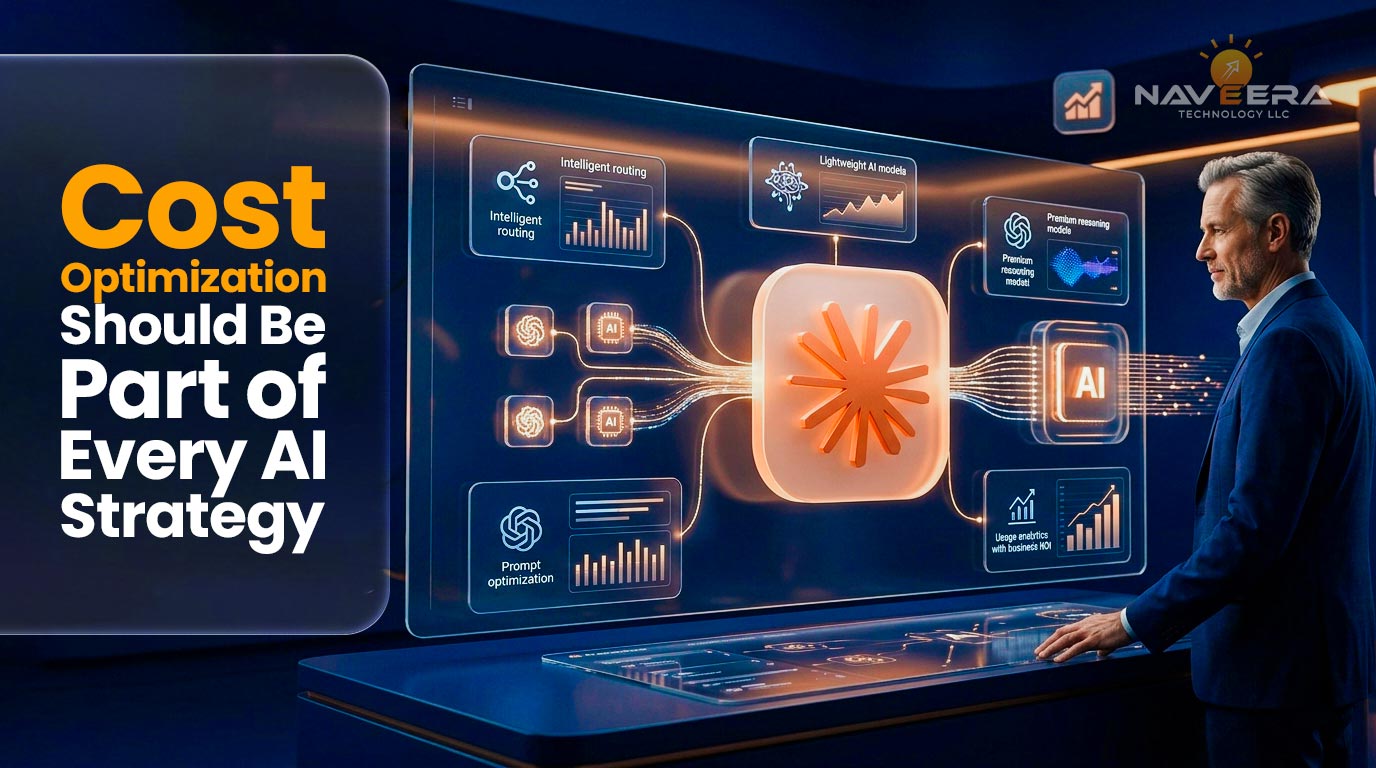
Higher model performance does not necessarily require higher spending.
Successful organizations build AI ecosystems that balance capability with efficiency.
Several best practices are emerging across enterprise AI implementations.
Route Simple Tasks to Smaller Models
Routine activities—including document summaries, content generation, and internal communications—can often be completed effectively using smaller, lower-cost models.
Reserve Premium Models for Complex Decisions
High-value reasoning tasks should be directed to Claude Fable 5 or similar advanced models where deeper analysis provides measurable business benefits.
Optimize Prompt Design
Well-structured prompts reduce unnecessary token usage while improving response quality.
Prompt engineering remains one of the simplest ways to control operational costs.
Monitor AI Consumption
Dashboards that track model usage across departments enable proactive cost management before unexpected spending occurs.
Evaluate Business Outcomes
Rather than measuring AI success solely by usage metrics, organizations should assess:
- Productivity improvements
- Time savings
- Customer satisfaction
- Revenue impact
- Operational efficiency
This outcome-focused approach ensures AI investments remain aligned with business objectives.
What This Means for CIOs and Technology Leaders
The pricing update reflects a broader shift occurring across the enterprise AI market.
Leading organizations are moving away from experimentation and toward operational excellence.
This evolution requires new capabilities, including:
- AI governance
- Responsible AI frameworks
- Data readiness
- Cloud optimization
- Cost management
- Enterprise AI architecture
- Security and compliance
Technology leaders who establish these foundations today will be better positioned to scale AI initiatives confidently across the business.
The future of enterprise AI will not depend on deploying the most powerful model everywhere. Instead, success will come from building intelligent ecosystems where each workload is matched with the most appropriate model based on business value, complexity, and cost.
Building a Sustainable Enterprise AI Strategy
Anthropic’s Claude Fable 5 pricing update serves as more than a commercial announcement. It highlights the growing maturity of enterprise AI adoption.
Organizations are entering a new phase where governance, architecture, and financial accountability become just as important as model performance.
Businesses that embrace intelligent model routing, optimize AI consumption, and align technology investments with measurable business outcomes will be better equipped to scale AI responsibly while maintaining cost efficiency.
Rather than viewing premium AI models as everyday productivity tools, enterprise leaders should recognize them as strategic assets designed for solving the organization’s most complex challenges.
How Naveera Helps Organizations Scale AI Responsibly
Enterprise AI success depends on far more than choosing the right language model. Organizations need a modern data foundation, cloud-native architecture, robust governance, secure integrations, and scalable engineering practices to turn AI initiatives into measurable business outcomes.
Naveera partners with enterprises to design, build, and optimize AI-powered technology ecosystems that are secure, scalable, and production-ready. Our expertise spans AI Strategy, Data Engineering, Data Analytics, Cloud Engineering, Application Modernization, Enterprise Integration, Intelligent Automation, Data Governance, and Global Talent Solutions, enabling organizations to accelerate AI adoption with confidence.
Technical AI & Data Use Cases
| Technology Domain | Enterprise Use Case | Business Value |
| Enterprise Data Engineering | Build modern data lakes, data warehouses, and real-time data pipelines | AI-ready, trusted, and scalable data foundation |
| AI & Generative AI | Develop enterprise copilots, RAG applications, intelligent search, and agentic AI solutions | Accelerate decision-making and improve workforce productivity |
| LLM Integration | Integrate Claude, GPT, Gemini, and open-source LLMs with enterprise applications | Secure and scalable AI experiences across business functions |
| Retrieval-Augmented Generation (RAG) | Connect AI models with enterprise documents, SharePoint, SQL databases, CRMs, and knowledge bases | Accurate, context-aware AI responses with reduced hallucinations |
| AI Agent Development | Build autonomous AI agents for IT operations, customer support, HR, finance, and workflow automation | End-to-end task automation and operational efficiency |
| Cloud Engineering | Design cloud-native AI infrastructure on AWS, Azure, and Google Cloud | High-performance, scalable, and cost-optimized AI environments |
| Application Modernization | Modernize legacy applications using APIs, microservices, containers, and AI-assisted development | Faster innovation and reduced technical debt |
| Enterprise Integration | Connect ERP, CRM, HRMS, ServiceNow, Salesforce, SAP, Microsoft 365, and other enterprise platforms | Unified enterprise workflows and seamless data exchange |
| Data Governance & Security | Implement data quality, lineage, access control, compliance, and AI governance frameworks | Secure, compliant, and trusted enterprise AI |
| MLOps & AI Operations | Automate model deployment, monitoring, evaluation, versioning, and lifecycle management | Reliable, production-ready AI systems with continuous improvement |
| AI Cost Optimization | Intelligent model routing, prompt optimization, token monitoring, and usage analytics | Lower AI operating costs while maximizing model performance |
| Business Intelligence & Analytics | Build interactive dashboards, predictive analytics, and executive reporting platforms | Faster insights and data-driven decision-making |
Our Enterprise AI Delivery Approach
Naveera enables organizations to move beyond AI experimentation by establishing a production-ready AI ecosystem built on modern engineering principles.
Our approach includes:
- AI Strategy and Enterprise AI Roadmap Development
- AI Readiness Assessment and Data Modernization
- Data Lake, Lakehouse, and Data Warehouse Implementation
- Enterprise RAG and Knowledge Management Solutions
- AI Copilot and Agentic AI Development
- LLM Integration and API Engineering
- Cloud-Native AI Infrastructure Design
- MLOps, AI Observability, and Model Lifecycle Management
- Enterprise Integration and Workflow Automation
- AI Governance, Security, Compliance, and Responsible AI
- AI Cost Optimization through Intelligent Model Routing and Token Analytics
Whether organizations are evaluating premium reasoning models such as Claude Fable 5, building enterprise AI copilots, implementing Retrieval-Augmented Generation (RAG), deploying autonomous AI agents, or modernizing mission-critical applications, Naveera delivers the technical expertise and engineering excellence required to scale AI securely and efficiently.
By combining deep expertise in AI, Data, Cloud, and Enterprise Engineering, Naveera helps organizations transform fragmented AI initiatives into a governed, scalable, and future-ready enterprise AI platform that delivers measurable business value.